Positive Drug Tests Among U.S. Workers Hit Two-Decade High – And while it can still be tough to fill open roles, Link Staffing and the employers it works with still view marijuana use as a deal breaker.

Fewer employers tested applicants for marijuana last year than in 2020 as companies grappled with nationwide labor shortages

The percentage of working Americans testing positive for drugs hit a two-decade high last year, driven by an increase in positive marijuana tests, as businesses might have loosened screening policies amid nationwide labor shortages.

Of the more than six million general workforce urine tests that Quest Diagnostics Inc., one of the country’s largest drug-testing laboratories, screened for marijuana last year, 3.9% came back positive, an increase of more than 8% from 2020, according to Quest’s annual drug-testing index.

That figure is up 50% since 2017. Since then, the number of states that legalized marijuana for recreational use grew to 18 from eight, plus the District of Columbia.

Despite the increase in positivity last year, fewer companies tested their employees for THC, the substance in marijuana primarily responsible for its effects, than in recent years, said Barry Sample, Quest’s senior science consultant.

The shifting legal backdrop and changing cultural attitudes have prompted some employers to stop testing for marijuana while companies in some states are barred from factoring the test results into hiring decisions, according to Dr. Sample. And those trends accelerated last year amid the recent shortage of workers, especially in states where recreational marijuana is legal, Dr. Sample added.

“We’ve been seeing year-over-year declines in those recreational-use states, but by far the largest drop we’ve ever seen was in 2021,” he said about the number of drug tests that screened for THC.

Cannabis companies in the U.S. lack access to banking and other financial services because the drug is federally illegal. That could change through new legislation or thanks to broader legalization efforts backed by the Democratically-controlled Senate. Photo Illustration: Laura Kammermann
The percentage of specimens tested for THC declined 6.7% nationwide in 2021 from 2020, while that figure fell by 10.3% in states where recreational marijuana is legal, according to Quest’s data.

“We certainly heard from some of our employer customers that they were having difficulty finding qualified workers to pass the drug test,” Dr. Sample said of pre-employment tests for THC, especially in states where use of the drug is legal.

Overall, the proportion of U.S. workers who tested positive for the various drugs Quest screened for in 2021 rose to 4.6%, the highest level since 2001, according to Quest, which analyzed nearly nine million overall urine tests last year on behalf of employers.

That percentage is more than 31% higher than the low of 3.5% a decade ago, in the early days of a resurgent heroin epidemic in the U.S.

In Michigan, where recreational marijuana was legalized in 2018, many employers didn’t loosen their requirements on pre-employment drug tests for a few years, according to Tammy Turner, co-owner of Kapstone Employment Services, a Detroit-based staffing agency.

But during the pandemic and the related labor shortages, Kapstone, which works mostly with manufacturers that supply the Big Three car makers, encouraged regional employers to loosen their THC-screening policies for many positions.

“So many of our clients were adamant, in pre-Covid, that they would not accept anyone that could not pass a drug test, even if it was THC,” Ms. Turner said. “We had to encourage some of them to reassess their policy, and they did, and we were able to fill many of those jobs as a result.”

For certain positions, such as those that involve heavy machinery, Kapstone still screens applicants for THC and other drugs, as required by the federal government, said Kerry Buffington, co-owner of the company.

Ms. Buffington and Ms. Turner said they don’t see any of the companies they work with reverting to their pre-pandemic hiring standards even if the labor shortage eases.

Marijuana use has become so casual among some young workers that Ms. Turner said some potential workers have shown up to her office smelling like the drug, and one worker who was placed by Kapstone got fired after using a vape pen in the workplace. The firm has had to counsel some workers on what is appropriate at work, Ms. Turner added.

In the hospitality industry, many employers had already stopped screening potential employees for drugs, including marijuana, before the pandemic, according to one representative for a hotel management company with operations across the country, including in Georgia, Minnesota and Colorado.

The representative said their company along with several of their industry peers stopped conducting pre-employment drug tests in the past five years because of the associated expenses and evolving legal landscape.

Chris Layden, senior vice president at staffing firm ManpowerGroup, said the elimination of marijuana screening is one of the most common ways companies are seeking to expand their pool of eligible workers. ManpowerGroup estimated that drug testing eliminates about 5% of candidates.

ManpowerGroup is seeing companies across nearly all industries, except for financial services and federally regulated businesses, eliminate marijuana testing requirements, Mr. Layden said.

Michelle Bearden, chief risk and operating officer for Houston-based staffing and recruiting firm Link Staffing Services Inc., said she has yet to see a strong reason why Link Staffing should move to loosen pre-employment marijuana screenings before the federal government does. She acknowledged the job market has been tight during the pandemic, but said she doesn’t think nixing THC screenings is a good solution.

“[Marijuana] is still on the federal list of prohibited substances, and that is what our policies are driven by at this point,” she said. “If I see that there is an overwhelming reason or cause for us to change ahead of that, we will.”

In Texas, Link Staffing, which mostly hires for the manufacturing and distribution sectors in the Dallas and Houston areas, has made some concessions to fill open roles amid the labor shortage, including by easing background-check requirements, Ms. Bearden said.

And while it can still be tough to fill open roles, Link Staffing and the employers it works with still view marijuana use as a deal breaker.

“We employ people in safety-sensitive jobs, and I think your employers that operate workplaces with high safety concerns—it may still be part of what they view as a hazard in the workplace, for people to be under the influence of anything,” Ms. Bearden said.

Write to Will Feuer at [email protected]

Copyright ©2022 Dow Jones & Company, Inc. All Rights Reserved.

Appeared in the March 30, 2022, print edition as ‘Positive Drug Tests Hit Two-Decade High.’

https://www.wsj.com/articles/positive-drug-tests-among-u-s-workers-hit-two-decade-high-11648603800

Big Helicopter Small Landing Zone – Most patients who were killed in an Air Ambulance or Rescue Crash would have gone on to “survive” their injuries if they had been “driven” to medical care – Unacceptable Risk: The Troubling Medical Helicopter Safety Record

AZUSA, Calif. (KABC) — Authorities are investigating after a Los Angeles County Sheriff’s helicopter crashed in the Angeles National Forest north of Azusa Saturday.

The incident happened near Highway 39 and East Fork Road shortly before 5 p.m., according to officials.

Officials initially said five people were aboard the aircraft at the time of the crash, but L.A. Sheriff Alex Villanueva later confirmed that a total of six people were aboard. All were taken to Pomona Valley Hospital Medical Center.

Those aboard included a pilot and co-pilot, two paramedics, one crew chief, and a doctor from UCLA on a ride-along, Villanueva said. All are expected to survive, according to officials.

One person suffered critical injuries, two suffered moderate injuries, and another two suffered minor injuries, but all are currently in stable condition, officials said.

“They’re pretty banged up, some of them, and I’ll leave it at there’s some fractures, some broken ribs, and some things of that nature,” Villanueva said. “But thankfully nothing that is life-threatening at this time, and they’re in good hands here.”

https://abc7.com/azusa-aircraft-crash-angeles-national-forest/11665500/

Unacceptable Risk: The Troubling Medical Helicopter Safety Record

When the helicopter landed in his yard, Larry Strittmatter didn’t think about the cost. His wife Dana had accidentally burned her leg with boiling water. Instead of driving her to one of six hospitals within 15 miles of their house near Fort Worth, Texas, paramedics called a helicopter to fly Dana to the Parkland Hospital Burn Center in Dallas.

Shortly after Larry arrived, the doctors gave his wife a bandage, a prescription for Tylenol with codeine and a swift escort to the lobby. The hospital refused to admit her for such minor injuries, leaving the Strittmatters with a $17,000 flight bill. “The doctors said they were shocked and dismayed when they saw a helicopter landing,” Strittmatter says. They had been in touch with EMTs at the scene, and after hearing Dana’s injuries described had advised that she should be transported by ground ambulance.

In Arizona, 43 percent of patients transported by helicopter to hospital ERs were discharged within 24 hours, suggesting most didn’t need a helicopter at all. In Maryland, the 24-hour discharge rate for patients transported by state police helicopters was 41 percent prior to 2008.

https://www.popularmechanics.com/flight/a5814/medical-helicopter-safety-crashes/

“AFTER” – spending $200,000 to remodel their Dana Point home, Marilyn and Len Gardner realized a huge utility pole with as many as 20 power lines connected took away their peekaboo ocean view, and more importantly, they said, posed a safety hazard for their property.

Dana Point will consider undergrounding utility lines to improve views and safety

“AFTER” – spending $200,000 to remodel their Dana Point home, Marilyn and Len Gardner realized a huge utility pole with as many as 20 power lines connected took away their peekaboo ocean view, and more importantly, they said, posed a safety hazard for their property.

So, Marilyn Gardner took to the NextDoor app and voiced her concerns about the dangers and unsightliness of power lines in the community. Interest, especially in the Lantern District overlooking Dana Point Harbor, grew quickly, she said.

“We had a lively conversation,” Gardner said of the response on social media. Within a few months, she and her husband founded the Poles and Lines Coalition and began talking with neighbors about what could be done. Their group grew to now more than 300 members.

“If we want to be a world-class city, we have to look a certain way,” Gardner said.

The P.A.L.Coalition then requested the city assess the location of overhead utilities and develop a cost estimate to underground the lines.

Recently, the Dana Point City Council unanimously approved hiring a consultant for $49,000 to see what it would take to bury utility lines citywide. The plan would be ambitious – the city’s cost alone to underground areas in the public domain could be as much as $500 million.

The consultant is expected to be back with a report by early summer.

“Enough of our residents in the Lantern District have done their due diligence,” Mayor Joe Muller said about the council’s willingness to move forward with the initial first step. P.A.L worked for 14 months, he said, holding community meets, meeting with experts and city officials to get the message out.

“In a bluff-top city, it’s expensive to go underground,” Muller said. “We can’t answer the questions until we know more; otherwise, we’re just shooting in the dark.”

The consultant will complete a citywide assessment and map all of the utility lines, develop a cost estimate on burying the lines and update the city’s Utility Undergrounding Assessment District Policy to meet current regulations and procedures.

Muller said it would be critical to find an appropriate funding source for the project.

“We’re looking at utility assessment districts and how we could set these up,” he said. “That how we can decide if we want to do this or not.”

Muller said that many times, when lines are buried, the costs to hook up to those lines are extremely expensive – sometimes tens of thousands of dollars. Dana Point is an older community with many people on a fixed income, so figuring out how to make the undergrounding equitable to all is critical, he said.

“Everyone thinks underground is a good idea until they have to pay for the connection,” Muller said. “How do you force it on people who don’t want it?”

About six years ago, residents in Capistrano Beach also expressed interest in undergrounding utilities, but the idea fizzled because few were keen on the high connection costs once the utilities are buried.

Muller added that the new federal infrastructure bill signed by Pres. Joe Biden in November may offer help.

Gardner also points to that as an option.

Meanwhile, she said she is ecstatic about the city’s response, but plans to do her best to reach more people in the community over the next few months while the consultant undertakes the city’s study. Her goal is to hold an in-person community meeting sometime next year.

“We’re in it for the long-haul, whatever it takes,” she said. “It’s unacceptable to have this blight on our beautiful city. I know this isn’t a done deal, but it does mean it’s starting. To have the 5-0 vote is so gratifying, and it took a lot of effort and work, but it was worth it.”

Gardner also gave props to Councilman Mike Frost, who represents the Lantern District. “He was behind every meeting.”

We want the Taxpayers to Improve Our View – because we’re Stupid – and Now it’s Public!

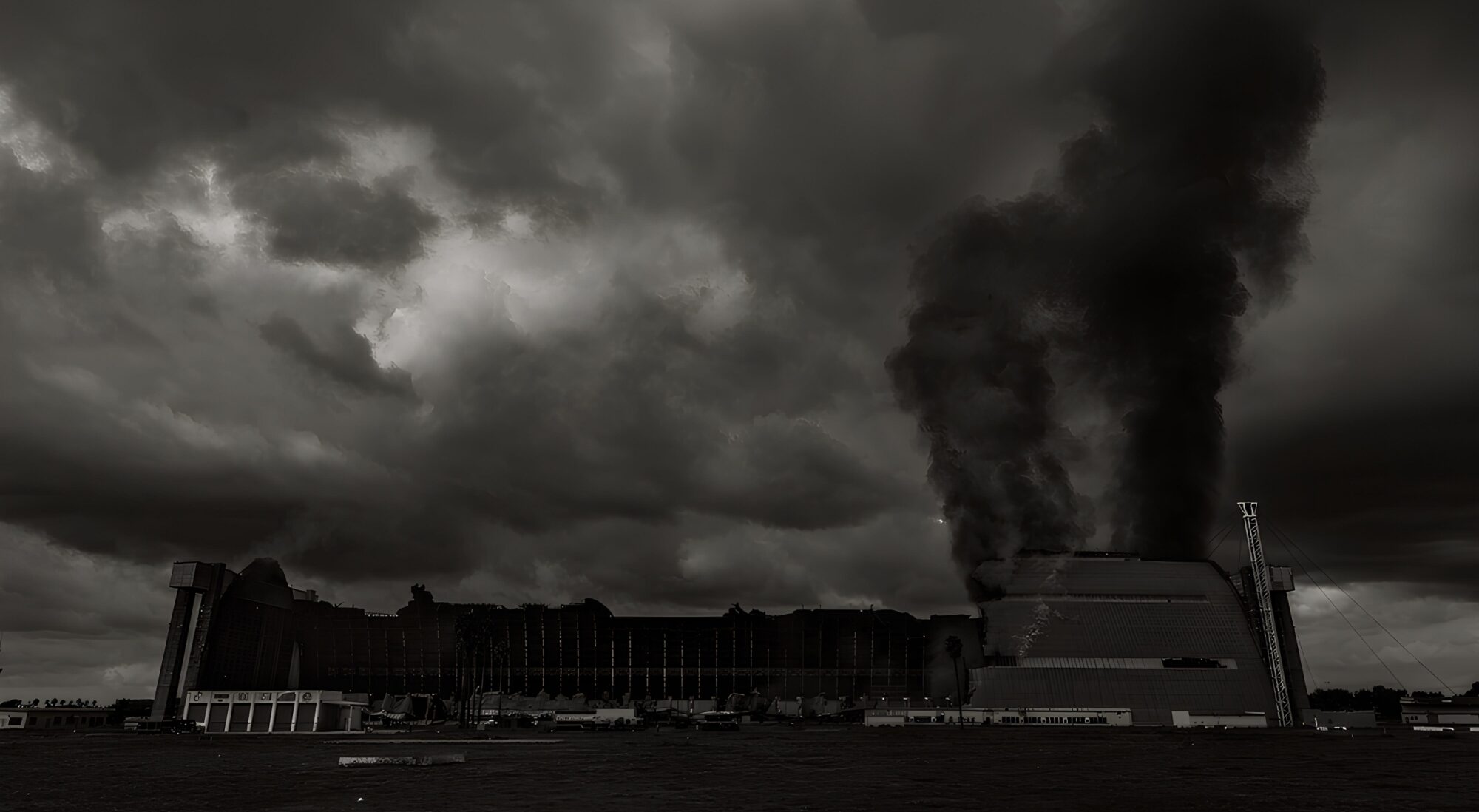
Hangar Fire - "Without Litigation" - City of Tustin Already On the Hook for $90 Million in Clean-Up Costs - "Not Including the Actual Hangar Property" - and Heading for a Billion Dollars - Developers Likely Not Off the Hook Either - Property Value Assessments Undergoing Official Review - Ask Yourself - Would You Buy or Rent at the Tustin Legacy - Remember there's "Another" Hangar Too
Addicted? 1-800-662-HELP
URGENT REMINDER - if You're on Southern California Edison's - "Time to Fuck You" - "Electricity Rate Plan" - "Opt Out Now" - Call Today or Visit the Website - 1-800-810-2369